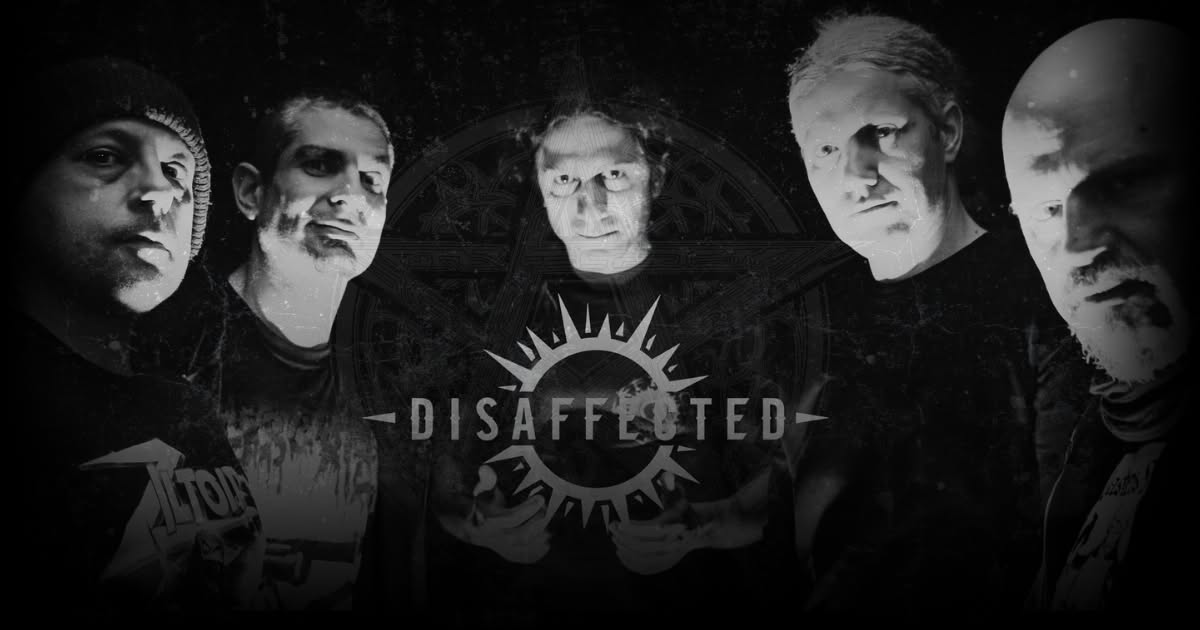
A (Gião): The early 90s were magical and difficult at the same time for Portuguese metal bands. The scene in Sintra, Cascais and Oeiras was emerging brutally, with many bands appearing and others consolidating. There was no internet yet, and all promotion was through tape trading and fanzines, mainly for underground bands, and so for a band like us, it was very difficult to penetrate the European circuit, due to the distance of the Iberian Peninsula from the center of Europe, where everything was happening. Regarding Portugal, the scene was magical because everything was very DIY, the conditions were still very amateurish in all aspects. There was little offer in terms of live shows, but any show by a Portuguese metal band was always magical — full-house with people vibrating. Those were the days.
A (Gião): Yes. In 1995, "Vast" was a very ahead-of-its-time album, and today for many people it's still considered an album with a modern sound. Initially, we were a death/thrash metal band, but from 1994 onwards we introduced keyboards to the band, and we started exploring a more death prog style, with jazzy and experimental influences, and this greatly marked the style that the band would adopt from then on. Since then we have tried to be as original as possible, and maintain our own style — the Disaffected style.
A (Gião): The band ceased activities in 1997 due to a motorcycle accident involving the band's founding guitarist, which left him in a coma for a long time, with a very slow and difficult recovery. We felt that his presence and songwriting spirit at the time were fundamental to the band's future, and therefore we chose to cease activities. The other band members continued their careers in other musical projects after that. In 2006, when Sérgio Paulo was fully recovered, the idea was just to do some commemorative reunion shows with a new drummer and a new keyboardist. But the spirit and enthusiasm were growing stronger in rehearsals, and we started composing new material, and decided to record and restart the band's full activity.
A (Gião): As I said before, we always try to be as original as possible, creating our own style with professionalism, attitude, and commitment, and this may be an example for new bands, and some may even draw inspiration from our death prog roots and consider us an influence.
A (Gião): The new album is a conceptual album, and the thematic explores the evolution of artificial intelligence technology in the modern world. I think the lyrics and thematic of the album fit perfectly with the album's sound and the band's new musical direction, which in many ways returns to its raw, cold, and more experimental roots.
A (Gião): Yes, the thematic focuses a bit on that aspect, and on how technology is changing the world, and music is no exception. Digital is increasingly surpassing the physical format. The digital apocalypse that often controls our lives, the technological evolution in a God-Man-Machine cycle, is also increasingly present in music.
A (Gião): "Spiritual Humanized Technology" is a complex, cold, and dark record. It has ambient passages and I consider it more experimental and complex than the previous album. It has many experimental and atmosphere influences from the old formula of "Vast" and "Rebirth", mixed with the in-your-face style and traditional song structure of "The Trinity Threshold", never leaving aside our own death prog style.
A (Gião): The songwriting process was the same as on previous albums. It was based on guitar riffs, and then we all contributed with our parts, giving the Disaffected style to the songs. The composition in the rehearsals is organic, collective and collaborative. The lyrics and thematic, and the vocal parts, just like on previous albums, were added after the songs are finished. I think that on this album, José Costa managed to perfectly place the vocals and the thematic fit perfectly with the overall sound of the record.
A (Gião): On this album, I tried to maintain the Disaffected style, with the technical and jazzy prog influences, but smoother and groovy. This album was recorded with a fretless bass, and that required a different musical approach, which also contributed to the final result being more groovy and hot.
A (Gião): We aimed for a result that was both intermediate and as organic as possible. The result of Fernando Matias' production turned out exactly as we intended, and the mastering done by Miguel Tereso gave it the power and the more old-school sound we were hoping for.
[VIDEO]
A (Gião): José Costa did an exceptional job on this album, and perfectly embodied the spirit of the album's sound in the lyrics, metrics and vocal parts. The guttural vocal parts certainly have their own unique and unmistakable tone, but he tried to include more clean and robotic parts in equal measure, resulting in a final work that greatly satisfied us.
A (Gião): The lyrical themes explore the dark side of dreams, alien abductions, the dark side of the subconscious, the power of words, technological evolution and artificial sensitivity in the God-Man-Machine cycle, and reflect a human awakening to resist the digital apocalypse that often controls our lives.
A (Gião): Many quality bands disappeared, while others are still active from the '80s and '90s. Those that disbanded, in my view, had various factors and reasons — Portugal's isolation from the rest of Europe, some fear of leaving their comfort zone, monetary reasons, demotivation or internal conflicts. Few managed to succeed, some are still active and many quality bands have appeared in the meantime, which currently gives the Portuguese metal scene a wide range of quality options for the listener.
A (Gião): We try to be as original as possible, without clichés, and to occupy our space, both nationally and internationally, and not compete with other bands within the same death prog genre.
A (Gião): The '90s were very fertile in terms of musical talent in the national metal scene, and perhaps the desire for recognition, the audacity, the spirit of conquest and pleasure in creating music of these bands and musicians was reflected in the quality that many of them still have today.
A (Costa): Throughout this album, I felt like I was moving through a kind of inner cycle between the human and the transcendent. "Spiritual Humanized Technology" became more than just a collection of songs — it turned into a mirror that forced me to look at how I deal with doubt, belonging, and that constant tension between evolution and fragility. Vocally, it was a real journey. I've always enjoyed exploring different styles, but here I felt I needed to go deeper — not just technically, but emotionally. The harsher vocals came from moments of frustration and internal conflict, while the cleaner or more atmospheric parts grew out of phases where I needed to breathe and figure out where I stood in the middle of all the creative chaos. My influences didn't come only from bands or genres — they came from conversations, books, films, and even long moments alone, trying to understand what it means to be human while surrounded by technology, without losing the spiritual, emotional, imperfect side of things. For composition and arrangement I drew a lot from '70s and '80s prog rock. In the end, I embraced everything: the doubts, the anxieties, the drive to grow, and the need to express something bigger than myself. This album made me confront a lot, but it also allowed me to transform those experiences into art.
A (Bruno): The guitar work and ideas generally reflect the dark mind spirit at the moment. The compositions have some influences — from fusion jazz to progressive metal and rock. Time signatures are very similar to some examples that lead to a dancing song and not stick to a 4/4 standard.
A (Mané): I resorted to a bag of tricks I came to develop through listening to a bunch of seminal drummers from the '80s and '90s — Danny Herrera, Igor Cavalera, Dave Lombardo, Gene Hoglan. My main concern was to give as much intensity and power as I could to each and every riff, without overplaying them. I honestly don't think there was overall strategic planning in my composition. I just tried to address each riff at a time, as they were presented to me in the studio, to the best of my ability. Nonetheless, I hope the listener can sense an old school vibe enriched with odd times, given the whole became hopefully greater than the sum of its parts.
A (Pedro): I've been a Korg user since the early '90s, and I also found that the first keyboard players in the band were Korg users, so it helped me blend in with Disaffected — I could relate to the sonic textures of the earlier albums, the choirs, strings and strange sounds. For this album I used my Korg synth for all sounds, and experimented with Pianoteq for the pianos. The only conscious goals I had in mind were to bring a little more dissonance and strangeness to the riffs and songs, to match a bit more with the early releases, and to add some piano atmospheres and lines with different reverbs and effects. It's difficult to explain the inspirations, because when composing for a song that is already structured, it's quite organic — I didn't try to force something pre-planned. I usually try to blend with the rhythm, the drums specifically, and see what comes out. I also tried to let the guitar and bass breathe, so I don't play on every riff on the songs — I tried to find an equilibrium and select the specific parts where I could add the atmospheres. When I started an idea from scratch, it usually begins with finding a specific sound first, then trying a rhythmic pattern, and it flows from there. I think the final result turned out quite balanced — some great atmospheres, eerie pianos, and bits of extra strangeness.
A (Gião): The love we have for the band, both the old and new members, the pleasure of creating music and playing live, and the respect for our old and new fans, gives us the strength to continue releasing new albums and making new music.