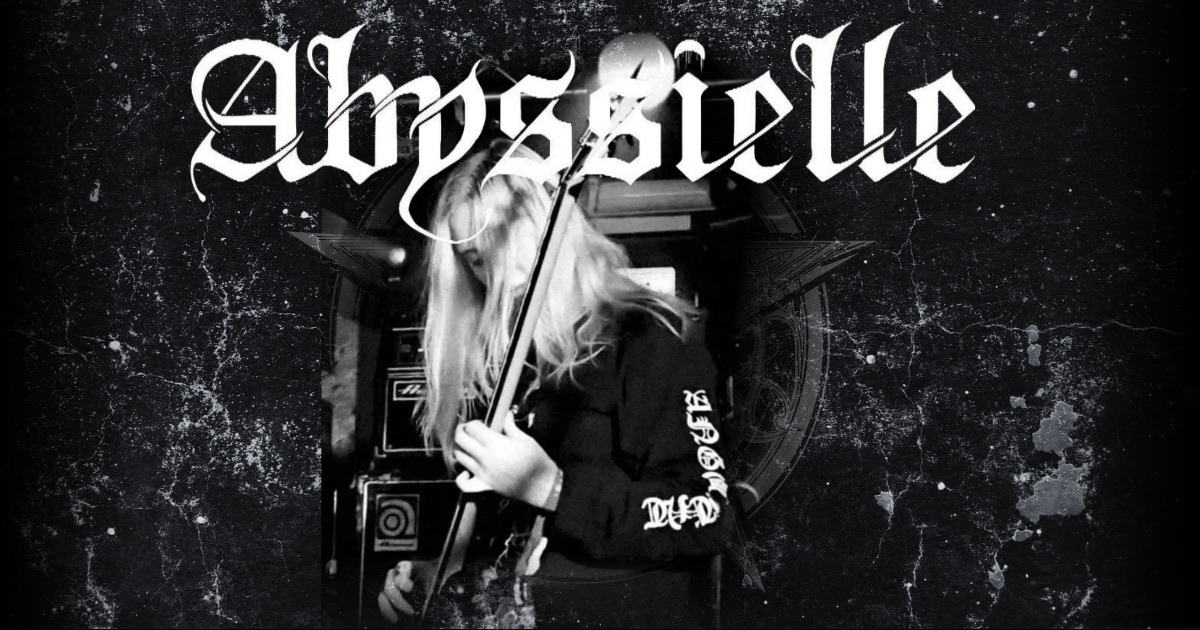
Q"Through Sun and Stone" was written following the loss of a close friend. The "Lessons in Loss" single made that clear before the album's release. How did you find the line between making something genuinely personal and making something you were willing to share publicly?
A: Releasing any kind of music, personal or not, felt a bit terrifying to start off with at the time. You put a lot of time and effort into something, unsure what will happen with it, and have no control over the outcome once it's out. You don't want to mess up, but you don't want to spend your whole life releasing nothing either out of fear that it's not "good enough". My favorite artists and painters released art that is loved because it is so personal or so reflective of the time they were experiencing. You just have to take a leap of faith and make music on your own terms. Once I was happy with my own terms, I found it easier to share it.
QThe Three Fates — Clotho, Lachesis, Atropos — structure the album as a framework. What drew you to Greek mythology specifically as a way into writing about grief? Was the mythology already part of the album's concept from the beginning, or did it arrive later as a way to organize what you were feeling?
A: I came across the Three Fates while reading "Meditations" which a friend got me thinking it would help me get through that tough time. And it did, I'll give him that. A lot of the lyrics are inspired by that book as I was reading it towards the end of the songwriting process. The acoustic songs naturally had a triptych structure, and the Three Fates fit that perfectly.
QYou handle guitars, bass, and mixing yourself. Jørgen Kirby sings, and Jobe Lewis plays drums. How do you work with musicians on a project that is so clearly personal in origin? Do they know the full context of what the music is about before they record?
A: Despite it having a personal approach behind it, I think the overall themes are universal in nature. So it's easier to convey what direction you're trying to go in while you're still making it. At the time, Jobe didn't have lyrics; he only worked with an instrumental, so his focus was on the "band" (well, me).
Jørgen is a great lyricist and writer. I had most of the lyrics written down, though I struggle to structure them into songs. Jørgen took the themes and lyrics I had given him and helped me rephrase them to fit, so he had a more in-depth approach to the concept before we recorded them together.
QYou mix the album yourself under the Abyssielle name. That's a significant creative decision — most people hand that off. What does handling the mixing yourself give you that working with an outside engineer wouldn't?
A: I enjoy mixing as much as songwriting. I find recording and mixing fun, and I like to try out ideas with them, regardless of whether they end up in the final mix. I thought it would be a good opportunity to try mixing an album for the first time. What I learned from "Through Sun and Stone" helped me mix some amazing artists afterward, like Abyssinian's "Malformed Lyght" and Blasphemous Degradation's "Eternal Hecatomb". Like guitar and bass, it's another instrument I'm trying to improve at every attempt.
[VIDEO]
QThese Hands Melt is a label based in Rome, founded in 2023. A London-based artist and a newly founded Italian label — how did that connection happen, and what has working with them meant for the physical release of this record?
A: I had some people reach out around that time asking me if I had plans to release an album at the time, and These Hands Melt was one of them. I saw that they didn't corner themselves into a specific niche, and they seemed to put a lot of care and effort into their physical releases, so I followed their journey while I was finishing the album. There was a gap between our first talk and when I was ready to show them the finished project, but they were still interested. Their patience was a positive sign. It has always been a huge goal of mine to have music on vinyl, and not only have they made that a reality, but they have also done a great job on the layout, color variant, and getting it out into the world.
QThe vinyl is a gold-in-black merge, limited to 200 copies, with a matt laminated sleeve. Physical format clearly matters to you. Do you collect records yourself, and is there a specific record in your collection that means something beyond just the music on it?
A: I collect records, tapes, CDs, anything I can get my hands on. Every format has its own charm and fits certain genres better than others. I could talk at great length about some stuff I own, but a record that has followed me since I got into heavy metal is Coven's first album, "Witchcraft Destroys Minds and Reaps Souls" — it's timeless, and I will never get tired of listening to it. Jinx has a commanding performance, and the record's atmosphere is so eerie for something that came out in 1969. It's always been one of my biggest and longest inspirations.
QAbyssielle has no social media presence beyond Bandcamp. In 2024, that's a conscious choice. What does operating without social media give the project that having it wouldn't — and is there anything it costs you?
A: Not having a band's social media has been a huge relief and gives me more headspace to focus on being creative instead of worrying about content. As a fan, I feel like I get to know bands better through fanzines, interviews, and their own physical media, so why am I not adopting these habits for my own projects? I don't think it cost me anything. I don't focus on building a big "reach", I just want people to focus on the music.
People tend to reach out to me by email even while I have social media, and I seem to have sold a lot of physical stuff in person, which is more rewarding.
QThe album has been reviewed in Legacy Magazine in Germany and AMMO in Austria. Both responded positively. Does external recognition change anything about how you relate to the music — or does the record feel the same to you regardless of how it lands with other people?
A: It was definitely a pleasant surprise. I didn't expect it to get coverage. As musicians, our releases always fall behind the progress we make in real time. It can be jarring to hear "old" music to us, while it's "new" to the world. It definitely sounds like me, but at a very different point in life and during a time that feels like several lifetimes ago. What people get out of it will always be different from how I look back on it.
QAbyssielle started in 2019. "Through Sun and Stone" is the first full-length. What took that long — and was that time necessary?
A: I was still studying! (and extremely depressed at the time). A great combination to make anything harder to complete.
It was also the first time I'd released anything of that scale; I was learning the ropes while making the album. The gaps between completing recording, mixing, artwork, and getting the album to the label added up, but I'm glad it took the time it needed. Once it's out, it's out forever, and I think it was worth it. Everyone did an amazing job helping me with it. For a first album, it was a solid first start.
QWhat comes next? Is there already something being built after this, or does this album still feel like the present rather than something you've moved on from?
A: Just like Executioner changing their name and becoming the legendary OBITUARY, I'm doing the same. I'm currently working on a small EP under a new (but similar) name, and a slight shift in sound. Yes, yes, I know, there's nothing scarier than a band changing their sound, but I've been pushed into a great rabbit-hole of bands like Sinmara, Root, and I want to wander a bit deeper and push myself further down that path. I've also started writing songs with the hope of them being played live someday, which would've been impossible with the number of layers Abyssielle had. I finally feel like I know what I want to sound like and who I want to be as a musician. Changing name feels like drawing a line in the sand between past and present, project and band.